Biomarkers for Longevity: What to Track, What to Skip
Published February 28, 2026 • By AgelessWorld Editorial Team
Last updated February 28, 2026 • Reviewed by AgelessWorld Medical Review Board (Clinical content review)
5 min read
Fact-check method
This article is reviewed against primary citations, guidance statements, and known evidence limitations before publication and update.
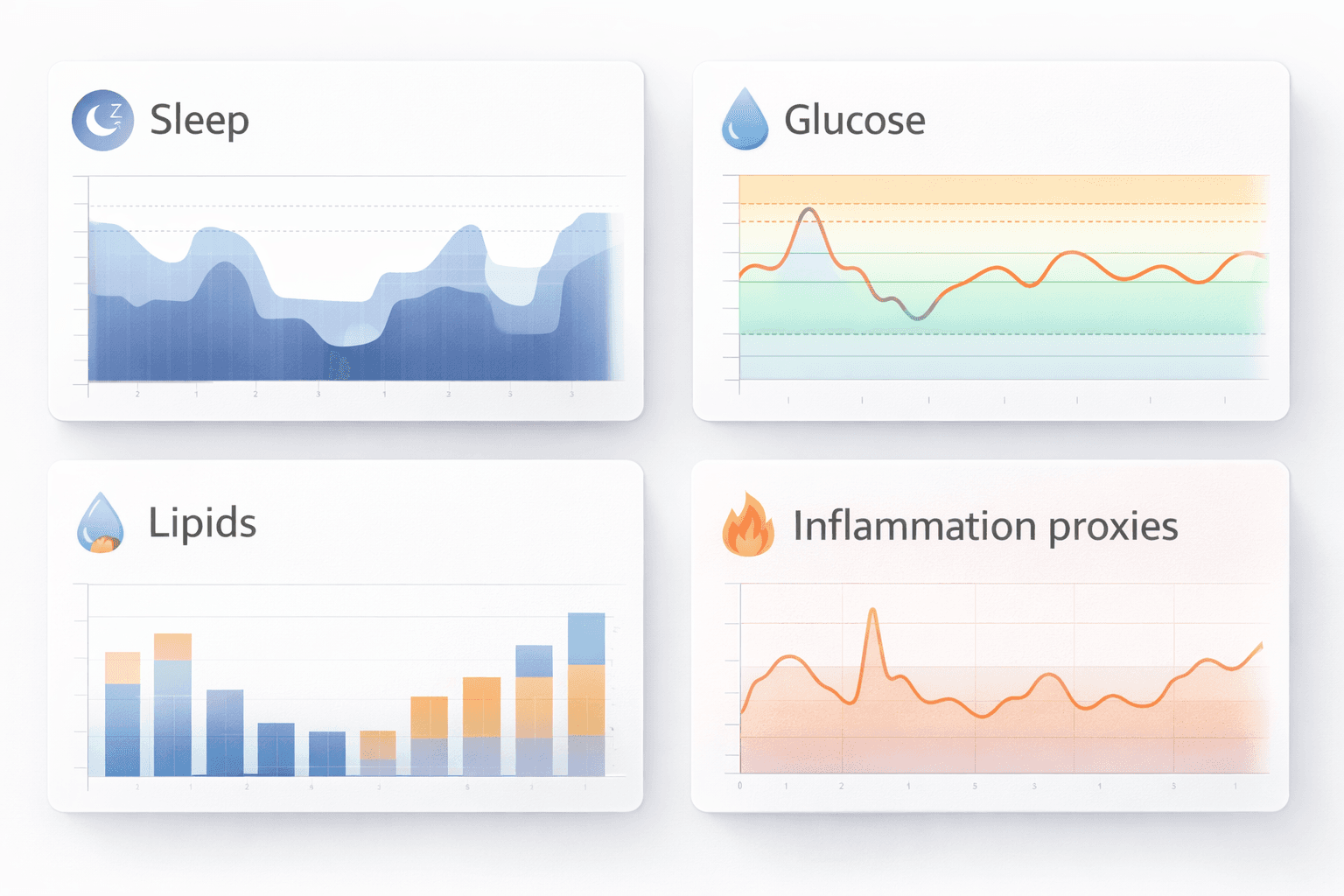
People interested in longevity often track too many metrics without a decision framework. This guide is for readers who want a high-signal dashboard and fewer distractions.
Expected outcome: a simple, practical approach to selecting biomarkers that can actually inform behavior changes.
Evidence Breakdown
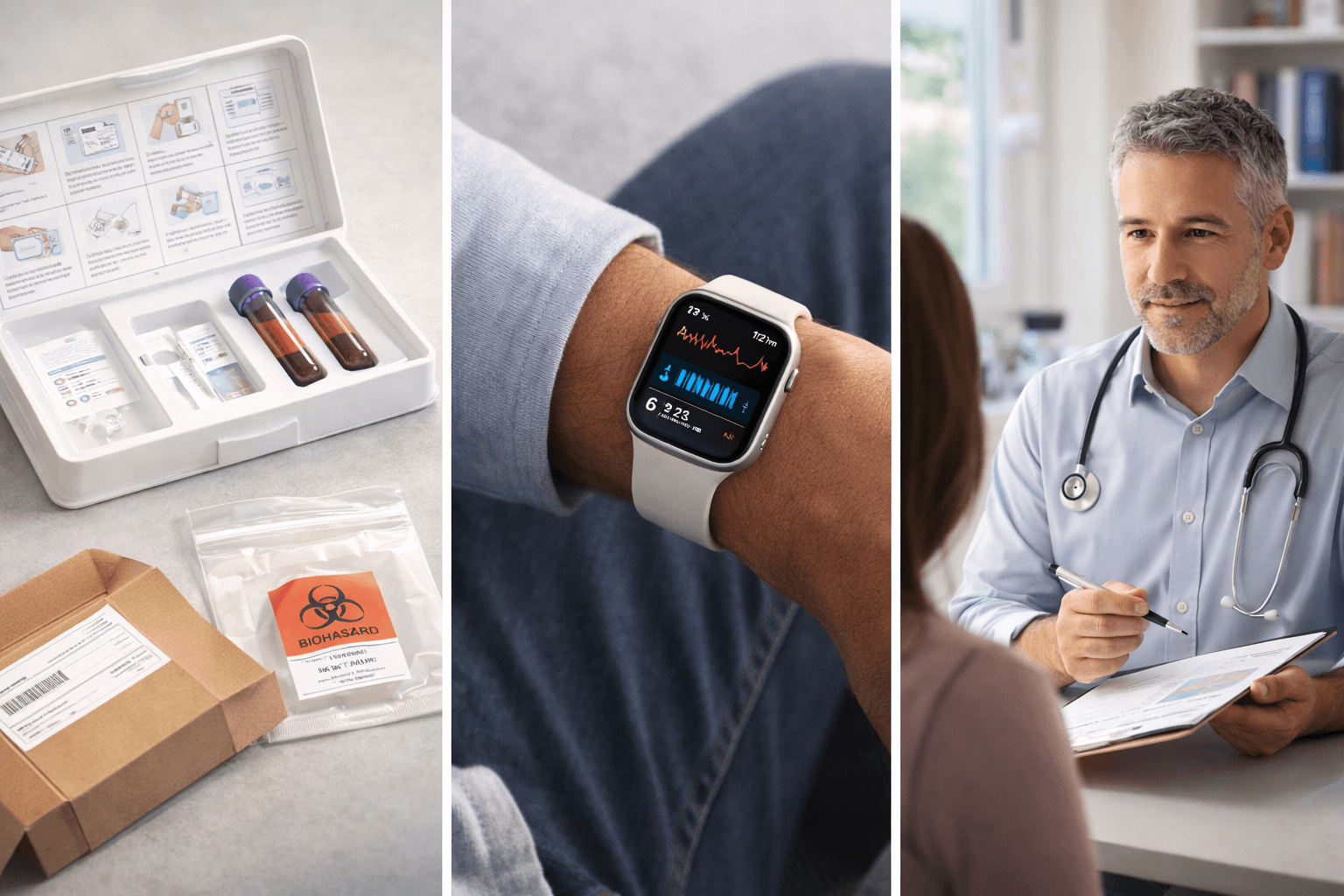
High confidence
- Basic cardiometabolic markers (glucose status, lipids, blood pressure) are strong risk indicators.
- Trend tracking over time is more useful than one-off snapshots.
- Behavioral context (sleep, activity, nutrition) improves interpretation quality.
Medium confidence
- Some inflammatory markers can add context, especially with symptoms/risk factors.
- Continuous wearable data can help behavior change but needs interpretation discipline.
Low confidence
- Expansive marker panels without clear action plans.
- Frequent expensive testing when no intervention decision depends on results.
Practical Protocol and Checklist

Minimum viable dashboard
- Blood pressure trend.
- Glucose-related markers (context-dependent).
- Lipid profile trend.
- Waist and body composition trend.
- Sleep consistency and activity volume.
Decision checklist before ordering a test
- Will this result change behavior or treatment decisions?
- Do I have baseline and repeat timing planned?
- Am I controlling major confounders (sleep, illness, training load)?
Use the Biological Age Calculator as a behavior-first signal, not a diagnostic test.
Risks and Contraindications
- Excessive testing can increase anxiety and false positives.
- Chasing novelty biomarkers may delay action on high-impact basics.
- Interpreting complex labs without clinician context can lead to poor decisions.
Who Should Talk to a Clinician First
- Existing chronic disease or significant family history.
- Abnormal baseline labs requiring differential diagnosis.
- Any plan to make medication/supplement changes based on test results.
Tier 1: High-Value Biomarkers Worth Tracking
These markers have robust evidence linking them to long-term health outcomes and — crucially — are responsive to behavioral interventions you can actually execute.
Fasting glucose and HbA1c measure glycemic status over time. Elevated fasting glucose and insulin resistance are among the strongest modifiable predictors of metabolic aging. HbA1c reflects 90-day average glucose and is more stable than fasting glucose alone.
Lipid panel (LDL, HDL, triglycerides) provides a cardiometabolic risk snapshot. Triglyceride-to-HDL ratio is increasingly used as a practical insulin-resistance proxy. Track trends across multiple draws, not single readings.
Blood pressure is the most underrated longevity biomarker. Systolic blood pressure above 130 mmHg is associated with accelerated vascular aging. It is free to measure, actionable, and tightly linked to lifestyle variables.
Waist circumference as a proxy for visceral adiposity is often more informative than BMI for metabolic risk assessment in non-athletic populations.
Resting heart rate and heart rate variability (HRV) are accessible through consumer wearables and serve as indirect proxies for autonomic nervous system function and recovery status.
Tier 2: Context-Dependent Markers
These can add value for certain individuals but are not universally useful or actionable without clinical context.
hs-CRP (high-sensitivity C-reactive protein) reflects systemic inflammation. Useful when elevated — particularly if lifestyle confounders like poor sleep, illness, or overtraining are absent. Not useful as a daily-tracking metric.
Vitamin D (25-OH-D) is worth a baseline draw, especially in populations with limited sun exposure. Deficiency is common and correctable. Beyond correction, supplementing to supraphysiologic levels has uncertain benefit.
Testosterone and SHBG can provide context for fatigue and body composition changes, especially in older adults, but should be interpreted with clinical guidance and not chased with aggressive supplementation without medical supervision.
Tier 3: Skip These (For Most People)
Telomere length tests sold directly to consumers have high variability and poor predictive utility at the individual level. Interesting science; poor actionability.
Continuous glucose monitors (CGMs) in metabolically healthy individuals without insulin resistance often generate anxiety around normal glucose fluctuations without driving meaningful behavior change. Better applied in people with prediabetes, T2DM, or documented glucose dysregulation.
Large longevity panel tests costing hundreds of dollars often include markers with no established behavioral intervention. The decision framework is simple: if you cannot name a specific change you would make based on the result, do not test for it.
How to Build a Practical Tracking System
- Get a baseline draw that covers glucose/HbA1c, lipids, and blood pressure.
- Set a retest interval — annually for most stable adults, every 6 months if you are actively changing behavior.
- Contextualize with wearable data — sleep quality, resting heart rate, and HRV trends from low-cost wearables provide behavioral signal between lab tests.
- Note confounders — illness, poor sleep, heavy training load, and acute stress all shift lab values. Avoid drawing labs during high-stress or high-training periods unless that context is the point.
Evidence Limitations
Biomarker utility depends on population context and endpoint relevance. Not every measurable variable improves prediction or intervention quality.
Related Reading
- Lower Your Biological Age in 2026: The Habits That Actually Work
- Fasting for Longevity: What the Evidence Actually Says
- Policy context: Editorial Policy and Disclaimer
Sources & Citations
- ESC/ACC prevention guideline summaries.
- ADA guidance on glycemic risk and screening.
- USPSTF preventive screening recommendations.
- Ridker PM. Inflammation and cardiometabolic risk overviews.
- WHO NCD risk-factor resources.
- NIH preventive health and biomarker education resources.
- Ioannidis JPA commentary on overtesting and evidence quality.
- Clinical reviews on wearable biomarkers and behavior change.
This article is for educational purposes only and does not provide medical advice.
Frequently Asked Questions
How We Choose Sources
We prioritize peer-reviewed human evidence first, major public-health guidance second, and use trend reports only as supporting context. Read our Editorial Policy for full methodology.
Written by AgelessWorld Editorial Team
Reviewed by: AgelessWorld Medical Review Board
Publisher: inboundflow.in
Last reviewed/updated: February 28, 2026
Editorial PolicyAdvertising PolicyDisclaimer
Not medical advice. Consult a qualified clinician for diagnosis or treatment decisions.
Advertisement