Circadian Rhythm and Longevity in 2026: A Practical, Evidence-Based Guide
Published February 28, 2026 • By AgelessWorld Editorial Team
Last updated February 28, 2026 • Reviewed by AgelessWorld Medical Review Board (Clinical content review)
3 min read
Fact-check method
This article is reviewed against primary citations, guidance statements, and known evidence limitations before publication and update.

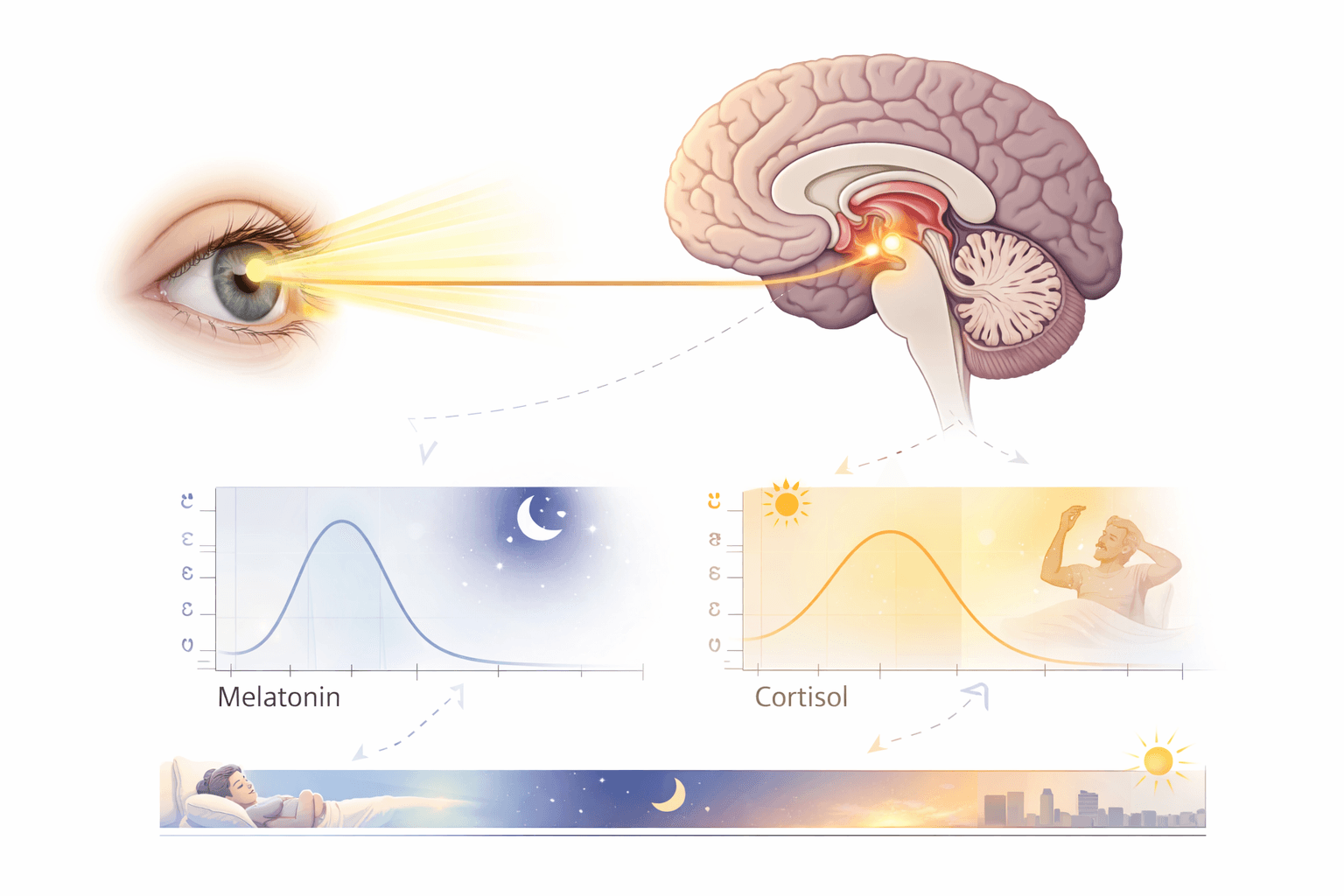
Circadian rhythm is your body’s internal timing system. It coordinates sleep, hormone release, metabolism, temperature, immune activity, and repair cycles. For people focused on healthspan, this is not a niche sleep topic, it is a system-level lever.
This guide is for adults who want practical anti-aging habits without extreme protocols. The expected outcome is better recovery, improved daytime energy, and lower metabolic stress by aligning behavior with biological timing.
Evidence Breakdown
High confidence
- Morning light exposure helps anchor sleep-wake timing and supports earlier melatonin onset.
- Consistent sleep and wake times are associated with better cardiometabolic outcomes than irregular schedules.
- Late-night bright light can delay sleep timing and reduce sleep quality.
Medium confidence
- Time-aligned eating windows may improve glucose handling versus late irregular eating.
- Daytime physical activity may reinforce circadian stability and improve nighttime sleep depth.
Low confidence
- Exact ideal chronotype correction strategy for every individual.
- Short-term wearable scores as direct proxies for long-term biological aging.
Practical Protocol and Checklist

Daily protocol
- Get outdoor light exposure within 30–60 minutes of waking.
- Keep wake time consistent (target within 30-minute variance).
- Stop large meals 2–3 hours before bedtime.
- Reduce bright screen/light intensity during the final 2 hours before sleep.
- Use a simple wind-down cue: same order each night (dim lights, light stretch, no work messages).
Weekly protocol
- Maintain schedule consistency on weekends (avoid social jetlag).
- Track one metric only: bedtime consistency rate.
- Review one friction point (late caffeine, late work, late dinner) and adjust once per week.
If you want a practical companion workflow, use the Sleep Optimizer and compare patterns over 2–4 weeks.
Risks and Contraindications
- Overly rigid sleep scheduling can increase anxiety and worsen sleep in some people.
- Shift workers may need tailored strategies; generic morning-light timing may not apply.
- People with severe insomnia, bipolar spectrum conditions, or suspected sleep disorders should avoid self-experimenting with aggressive sleep deprivation or melatonin misuse.
Who Should Talk to a Clinician First
- Persistent insomnia lasting more than 3 months.
- Loud snoring, witnessed breathing pauses, or daytime sleep attacks.
- Major mood instability linked to sleep timing changes.
- Diabetes or endocrine disorders with unstable control.
Evidence Limitations
Circadian research quality is strong in foundational physiology, but intervention trials vary by population, protocol duration, and adherence quality. Many improvements come from bundled behavior changes, so isolating one factor can be difficult.
Related Reading
- Lower Your Biological Age in 2026: The Habits That Actually Work
- Fasting for Longevity: What the Evidence Actually Says
- Policy context: Editorial Policy and Disclaimer
Sources & Citations
- Czeisler CA et al. Circadian and sleep physiology research summaries.
- Scheer FAJL et al. Circadian misalignment and metabolic risk.
- St-Onge MP et al. Sleep variability and cardiometabolic outcomes.
- Wright KP Jr et al. Light exposure and circadian timing effects.
- Roenneberg T et al. Social jetlag and health.
- Dashti HS et al. Chronotype and metabolic disease associations.
- American Academy of Sleep Medicine guidance on sleep timing.
- NIH/NHLBI educational resources on sleep and health.
This article is for educational purposes only and does not provide medical advice.
Frequently Asked Questions
How We Choose Sources
We prioritize peer-reviewed human evidence first, major public-health guidance second, and use trend reports only as supporting context. Read our Editorial Policy for full methodology.
Written by AgelessWorld Editorial Team
Reviewed by: AgelessWorld Medical Review Board
Publisher: inboundflow.in
Last reviewed/updated: February 28, 2026
Editorial PolicyAdvertising PolicyDisclaimer
Not medical advice. Consult a qualified clinician for diagnosis or treatment decisions.
Advertisement