Photoaging Prevention: Sunscreen and UV Behavior Guide for 2026
Published February 28, 2026 • By AgelessWorld Editorial Team
Last updated February 28, 2026 • Reviewed by AgelessWorld Medical Review Board (Clinical content review)
5 min read
Fact-check method
This article is reviewed against primary citations, guidance statements, and known evidence limitations before publication and update.
 Most preventable visible skin aging comes from cumulative UV exposure, not from missing a single expensive product. This guide is for anyone who wants high-impact protection habits with realistic daily execution.
Expected outcome: better sun-protection decisions that reduce long-term photoaging risk.
Evidence Breakdown
High confidence
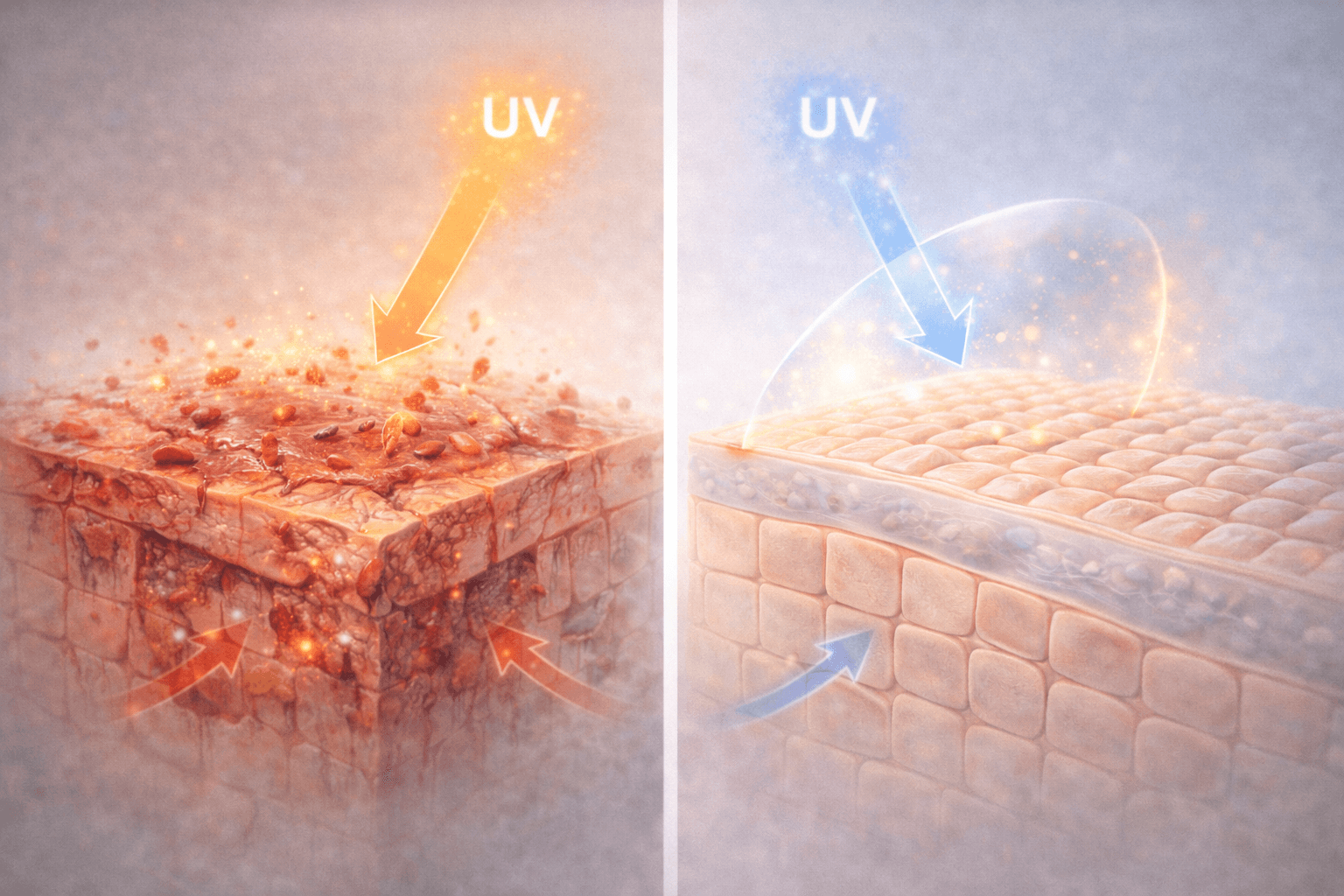
- Daily broad-spectrum sunscreen use reduces signs of photoaging over time.
- UV exposure peaks around midday in many regions; behavior timing matters.
- Protective clothing and shade reduce UV dose significantly.
Medium confidence
- Reapplication frequency depends on sweat/water/friction and practical adherence.
- UV index-based behavior planning improves protection consistency.
Low confidence
- Claims that one premium sunscreen formula is universally superior for anti-aging outcomes.
Practical Protocol and Checklist
Daily protocol
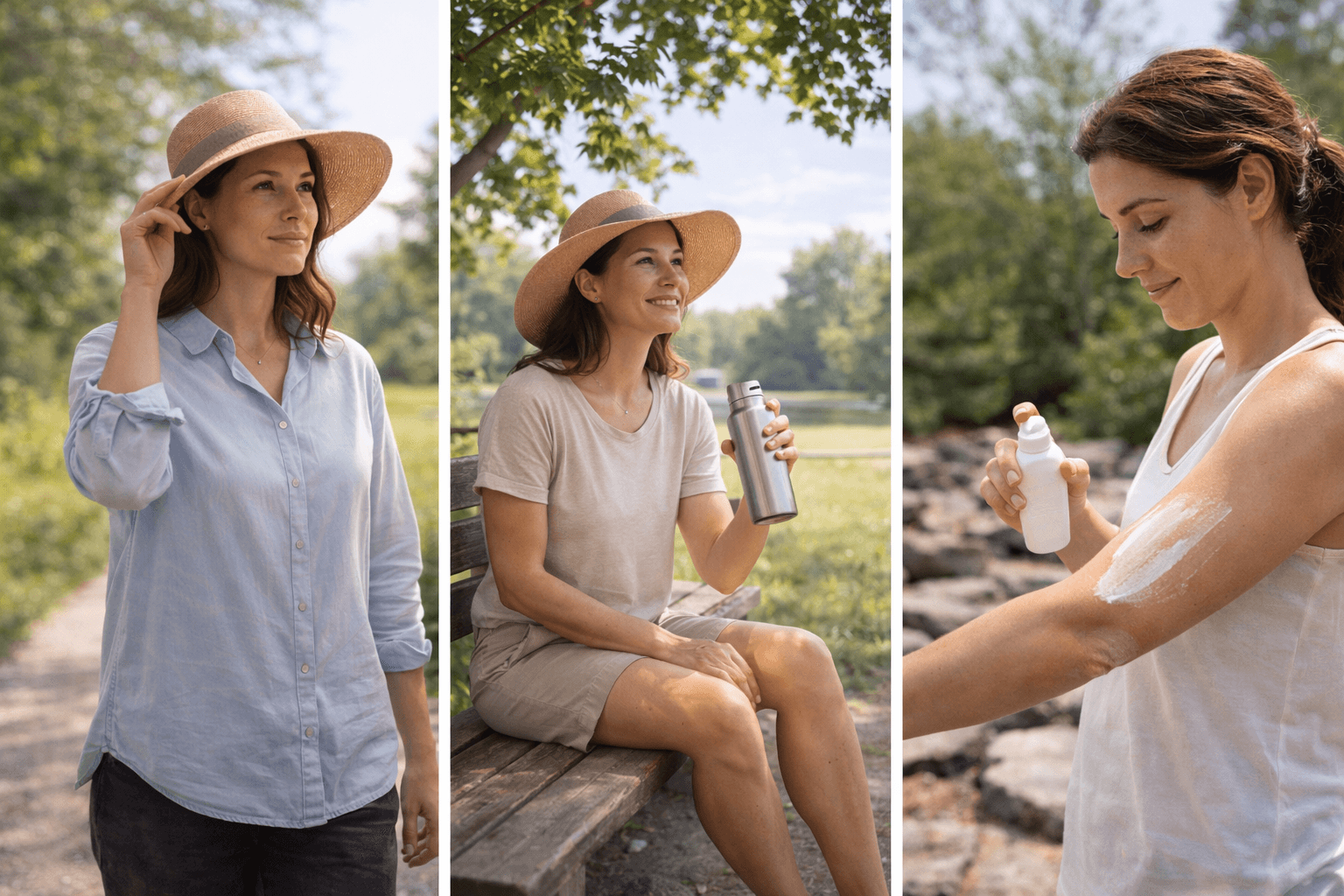
- Apply broad-spectrum SPF 30+ (or higher as needed) to exposed skin.
- Use approximate application volume targets for face/neck and body.
- Reapply during prolonged outdoor exposure.
- Prioritize shade and wide-brim hats during peak UV periods.
Weekly protocol
- Review missed-exposure moments (commute, workouts, errands).
- Keep one backup sunscreen in common carry locations.
- Check UV index and plan outdoor timing where possible.
For habit consistency across skin and lifestyle factors, use the Skin Health Score Calculator.
Risks and Contraindications
- Overreliance on sunscreen while ignoring duration and peak UV timing.
- Irritation from certain formulations; patch testing may help.
- False confidence from infrequent application.
Who Should Talk to a Clinician First
- History of skin cancer or atypical moles.
- Persistent photosensitivity or rash reactions.
- Medication-related UV sensitivity concerns.
Understanding UVA vs UVB: Why Both Matter
Most people think of sunburn when they think about UV damage, but sunburn is caused by UVB rays — which only scratch the surface of photoaging. UVA rays penetrate deeper into the dermis, breaking down collagen and elastin over time without triggering an obvious burn reaction. This is why daily, year-round protection matters even on cloudy days or when you spend most of your time indoors near windows.
A broad-spectrum sunscreen with both UVA and UVB coverage is not optional — it is the minimum effective standard for anti-aging protection. In the EU and many Asian markets, PA+ ratings indicate UVA protection level. In the US and Canada, "broad spectrum" labeling indicates UVA coverage alongside the UVB SPF rating.
SPF Numbers: What They Actually Mean
SPF 30 blocks approximately 97% of UVB radiation. SPF 50 blocks approximately 98%. The difference is smaller than most product marketing implies. More important than the SPF number on the label is:
- Application amount — Most people apply 25–50% of the volume needed for rated protection.
- Coverage areas — Ears, neck, backs of hands, and hairline are frequently missed.
- Reapplication timing — After sweating, swimming, or towel-drying, protection declines.
A practical rule: apply generously to face and neck every morning as the final skincare step, and reapply mid-day when outdoors for more than 90 minutes.
Behavioral Habits That Multiply Sunscreen Effectiveness
Sunscreen works best as part of a broader UV-avoidance strategy, not as a standalone solution. High-impact behavioral habits include:
- Timing outdoor activity around UV index peaks (typically 10am–4pm in most regions).
- Wearing UPF-rated clothing for extended outdoor exposure. UPF 50 clothing blocks more UV than any topical product.
- Using physical shade — tree shade, umbrellas, or covered walkways — which can reduce UV dose by 50–75%.
- Windshield and window UV — Front windshields typically block UVB but not UVA. Side windows vary. Drivers who spend significant time in the car often accumulate asymmetric UV exposure on the left side of the face.
Mineral vs Chemical Sunscreen: Practical Differences
Both categories provide effective protection when applied adequately. The key practical differences:
- Mineral (zinc oxide, titanium dioxide): Reflects UV, generally better tolerated for sensitive or reactive skin, may leave a white cast on deeper skin tones.
- Chemical (avobenzone, octocrylene, etc.): Absorbs UV energy, typically lighter texture and more cosmetically elegant, may irritate reactive skin.
The best sunscreen is the one you actually use daily. Switching formulations based on season, skin condition, or activity type is reasonable.
Evidence Limitations
Photoprotection studies generally show strong directionality, but real-world effectiveness depends heavily on adherence quality and application adequacy.
Related Reading
- Preventative Anti-Aging Routine in Your 20s and 30s (2026)
- Anti-Aging Myths That Waste Time and Money
- Policy context: Editorial Policy and Disclaimer
Sources & Citations
- Green AC et al. Randomized sunscreen trial and photoaging outcomes.
- Hughes MCB et al. Sunscreen use and skin aging progression.
- WHO UV index guidance and sun protection behavior resources.
- American Academy of Dermatology photoprotection recommendations.
- Diffey BL. UV exposure patterns and photodamage overview.
- NIH resources on skin cancer prevention and UV exposure.
- Cochrane and dermatology reviews on sunscreen effectiveness.
- Public health guidance on protective clothing and shade behavior.
This article is for educational purposes only and does not provide medical advice.
Frequently Asked Questions
How We Choose Sources
We prioritize peer-reviewed human evidence first, major public-health guidance second, and use trend reports only as supporting context. Read our Editorial Policy for full methodology.
Written by AgelessWorld Editorial Team
Reviewed by: AgelessWorld Medical Review Board
Publisher: inboundflow.in
Last reviewed/updated: February 28, 2026
Editorial PolicyAdvertising PolicyDisclaimer
Not medical advice. Consult a qualified clinician for diagnosis or treatment decisions.
Advertisement